
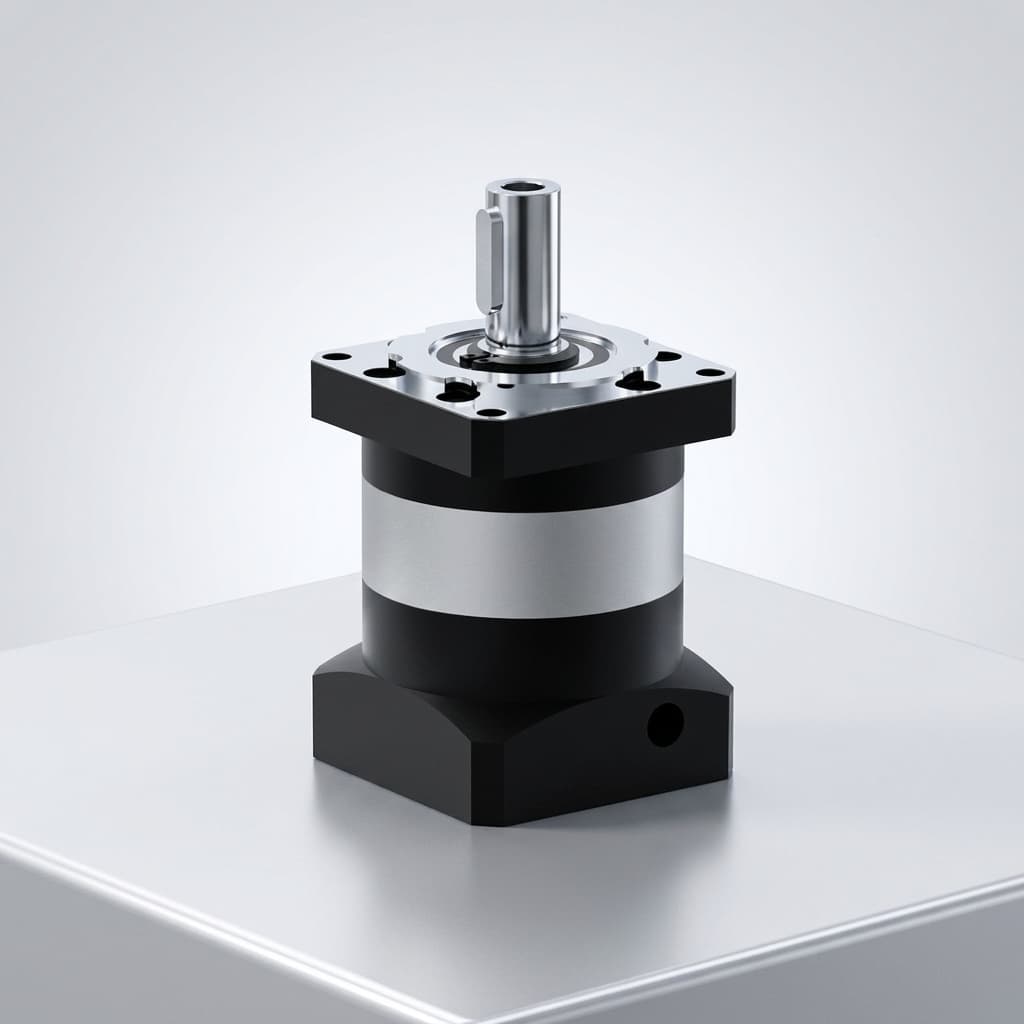
Predictive Maintenance for RV Reducers: A Buyer's and Engineer's Guide to Condition Monitoring
Discover how vibration analysis and thermal imaging can detect RV reducer degradation hours before failure, reducing TCO and unplanned downtime.
With unplanned downtime costing industrial manufacturers thousands of dollars per minute, the strategy for managing heavy-payload robot joints has shifted. Instead of running an RV (Rotary Vector) reducer until failure or replacing it on a rigid schedule, leading automation teams are now implementing Predictive Maintenance (PdM) and Condition Monitoring.
[!TIP] Key Takeaways
- Early Warning: Vibration monitoring and thermal imaging can detect reducer degradation 200 to 500 hours before a catastrophic failure.
- Root Cause: Wear clearance between cycloidal wheels and pinwheels is the primary driver of transmission accuracy loss.
- Sourcing Shift: Market reports increasingly identify "smart-ready" RV reducers with IoT sensor mounting and real-time wear monitoring as a specification trend for advanced robotic systems.
This guide explores how condition monitoring changes the procurement calculus, the technologies used, and how to specify the right reducer for your next project.
Published July 26, 2026, this guide is written for global OEM engineers, procurement teams, and maintenance leaders evaluating RV reducers for heavy-payload robot joints, welding positioners, and high-duty automation axes. It is a condition-monitoring and RFQ framework, not a substitute for model-specific reducer sizing, factory acceptance testing, safety validation, or your own fleet baseline data. For baseline torque and service-factor sizing before supplier discussions, start with our heavy-payload RV reducer selection guide.
1. The High Cost of Reactive Maintenance
An RV reducer is the mechanical heart of an industrial robot's base or shoulder joint. When it fails unexpectedly, the entire production line stops. The financial impact includes:
- Lost Production: Direct revenue loss during the breakdown.
- Expedited Shipping: Paying premium freight for heavy replacement parts (often weighing over 50kg).
- Secondary Damage: A seized reducer can cause servo motor burnout or damage the robotic arm structure.
By contrast, Predictive Maintenance uses real-time data to monitor the health of the reducer, allowing procurement teams to order replacement parts smoothly and engineers to schedule maintenance during planned shutdowns.
2. Condition Monitoring Technologies
How do we actually monitor the health of a densely packed, grease-filled cycloidal gearbox?
| Monitoring Method | Primary Indicator | Lead Time to Failure | Cost to Implement | Best Application |
|---|---|---|---|---|
| Vibration Analysis | Bearing wear, gear mesh degradation | 200 - 500 hours | High (Requires sensors/DAQ) | High-speed, continuous-duty robots |
| Thermal Imaging / Sensors | Lubrication failure, excessive friction | 50 - 150 hours | Medium | Heavy payload, high-torque joints |
| Acoustic Emission | Micro-cracking, early fatigue | > 500 hours | Very High | Critical aerospace or cleanroom robots |
| Motor Current Signature | Torque spikes, stiffness loss | 50 - 100 hours | Low (Uses servo drive data) | General industrial automation |
Indicative ranges synthesized from published reliability research and supplier application guidance. Validate thresholds against your reducer model, payload, duty cycle, lubrication state, and baseline vibration spectrum before using them for shutdown decisions.
3. The Degradation Timeline: Visualizing Wear
RV reducers do not usually fail instantly; they degrade. The primary mechanism is the wear clearance developing between the cycloid wheel, pinwheels, and main support bearings.
As the wear clearance increases, the transmission accuracy drops. This causes the servo motor to work harder to maintain position, generating abnormal vibration patterns. Eventually, the increased friction breaks down the grease, leading to a sudden thermal spike and complete mechanical seizure.
4. Boundaries: When is Condition Monitoring Overkill?
While IoT and predictive maintenance are powerful, they are not necessary for every application.
Implement Condition Monitoring If:
- The robot is part of a 24/7 continuous production line (e.g., automotive welding).
- The payload is extremely heavy (over 200kg) and operates near the reducer's maximum rated moment load.
- The cost of 1 hour of downtime exceeds the cost of a sensor array.
Skip Dedicated Sensors If:
- The robot performs low-duty cycle tasks (e.g., occasional pick-and-place).
- The environment is highly corrosive and standard sensors would fail before the reducer.
- You can rely purely on motor current signature analysis from the servo drive (a free, software-only alternative).
5. Procurement & Engineering Decision Matrix
When evaluating which condition monitoring strategy aligns with your RV reducer procurement, consider the following decision points. This matrix helps cross-functional teams (procurement, engineering, and maintenance) align on the right investment and communicate effectively with suppliers.
| Decision Criteria | Vibration Analysis | Thermal Imaging | Motor Current Analysis (MCSA) | Acoustic Emission | Oil/Grease Debris Analysis |
|---|---|---|---|---|---|
| Initial Capital Expenditure (CapEx) | High ($$$) | Medium ($$) | Low ($) - Uses existing drives | Very High ($$$$) | Low ($) per sample |
| Ongoing Operating Expenses (OpEx) | Medium (Software/Cloud fees) | Low (Minimal maintenance) | Low (Drive software only) | High (Heavy data processing) | High (Lab testing fees, manual labor) |
| Implementation Complexity | High (Requires sensor mounting & wiring) | Medium (Camera/sensor positioning) | Low (Software/API integration) | High (Extensive noise filtering needed) | Medium (Requires manual sampling routines) |
| Diagnostic Accuracy & Specificity | Excellent (Pinpoints exact bearing/gear wear) | Good (Identifies general friction/heat buildup) | Moderate (Detects global stiffness/torque loss) | Excellent (Detects micro-cracks very early) | Excellent (Identifies specific wear materials) |
| Applicability to RV Reducers | Highly Recommended (Standard for Smart RVs) | Recommended for heavy payload/high torque | Baseline requirement (Easy to implement) | Niche (Cleanroom, Aerospace, Defense) | Challenging (Due to sealed grease design) |
| Supplier Communication Focus (Inquiry) | Specify sensor mounting pads on RV housing | Confirm maximum continuous operating temp | Request factory baseline motor torque data | Request ultra-low noise casing options | Ask for easily accessible grease sampling ports |
6. Procurement & Engineering Checklist for Smart RV Reducers
If you are upgrading your robotic fleet or designing a new AMR/AGV platform, use this checklist to align your procurement strategy with predictive maintenance goals. Confirm these specifications with your RV reducer supplier during the RFQ stage:
- Sensor Mounting Provisions: Does the reducer housing have pre-machined flat surfaces or tapped holes for mounting piezoelectric vibration sensors?
- Grease Sampling Access: Are the lubrication ports easily accessible for regular grease analysis without disassembling the robot joint?
- Baseline Data: Can the supplier provide the factory baseline vibration spectrum (FFT data) for the specific reducer serial number?
- Thermal Limits: What is the maximum continuous operating temperature before the grease viscosity breaks down?
- Lead Times: Are spare parts available domestically, or do they require a 12-week lead time from overseas?
- Specification Dimensions: Is the flange dimension compatible with standard smart sensor enclosures, or will it require a custom adapter?
For a broader RFQ checklist covering hysteresis curves, CAD fit, quality control, and supplier risk, pair this condition-monitoring review with our RV reducer sourcing guide.
7. Real-World Case Study: Automotive Welding Line
To understand the tangible benefits of condition monitoring, consider a tier-one automotive supplier operating a fleet of 50 heavy-payload (200kg) 6-axis robots used in spot welding.
The Challenge: The manufacturer experienced two unexpected RV reducer failures in the base joint (Axis 1) over a 12-month period. Each failure caused 14 hours of unplanned downtime, resulting in a production loss of roughly 800 vehicle frames. The direct cost of downtime far exceeded the cost of replacing the reducer.
The Solution: The engineering team retrofitted piezoelectric vibration sensors to the primary joints and integrated the data stream with a cloud-based predictive analytics platform. They established a baseline frequency spectrum for a healthy reducer under normal load conditions.
The Result: Six months later, the system detected a steady increase in the 3x harmonic vibration amplitude on one robot, indicating early-stage pinwheel wear. The maintenance team received an alert approximately 350 hours before the predicted failure point.
Because of this early warning, the procurement team had sufficient time to order a replacement RV reducer without incurring expedited shipping fees. The maintenance engineers scheduled the replacement during a planned holiday shutdown. The intervention resulted in zero unplanned downtime and avoided an estimated $250,000 in lost production. Treat this as an illustrative operating model: actual savings depend on line value, spare-part availability, sensor quality, alarm discipline, and whether the maintenance window can absorb a reducer replacement without extending planned downtime. This case illustrates that the ROI of condition monitoring is realized not just in preventing catastrophe, but in restoring control over the maintenance schedule.
8. Frequently Asked Questions (FAQ)
Q: Can I retrofit condition monitoring sensors onto an existing RV reducer?
Yes. External vibration accelerometers and temperature probes can be epoxied or magnetically mounted to the outer casing of the reducer. However, integrated OEM solutions (often branded as "Smart RV Reducers") generally provide a better signal-to-noise ratio and more accurate readings since the sensors are physically closer to the gear mesh points.
Q: Does synthetic oil perform better than grease for predictive maintenance?
Oil baths allow for continuous particle analysis (ferrography) which is excellent for predicting wear and catching micro-spalling early. However, most modern heavy-duty RV reducers are grease-lubricated to prevent leakage in multi-axis robotic arms. Grease analysis is possible but requires manual sampling, which can be labor-intensive in a large facility.
Q: How do we interpret the vibration data from a cycloidal gearbox?
Unlike simple helical gearboxes, RV reducers have complex, multi-stage meshing frequencies (involving the spur gear stage, cycloidal wheel, pinwheel, and crank shafts). You will need specialized software or algorithms that understand the specific kinematic signature of an RV reducer to differentiate normal mesh frequencies from actual fault frequencies.
Q: What is the typical ROI period for investing in smart reducers versus standard ones?
For high-volume, high-downtime-cost applications (like automotive or semiconductor manufacturing), the ROI is typically realized after the very first prevented failure—often within 12 to 18 months. For lower-duty cycle operations, the ROI might take 3-5 years, making routine periodic maintenance a more cost-effective choice in those specific scenarios.
Q: Are there data privacy or security concerns with cloud-based condition monitoring?
Yes. Many manufacturers hesitate to send continuous machine data to a third-party cloud. As a result, edge-computing solutions are becoming popular. These systems process the vibration FFT data locally at the robot cell and only transmit health scores or anomaly alerts to the central SCADA system, keeping raw proprietary motion data securely on-premises.
9. Next Steps for Your Automation Project
Transitioning to predictive maintenance requires both the right hardware and the right data strategy. If you are sourcing RV reducers for an upcoming heavy-payload project and want to ensure they are fully compatible with modern condition monitoring standards, our engineering and procurement teams can help you navigate these choices.
Contact us today to discuss your specific payload requirements, request 3D CAD models with sensor mounting details, or review factory baseline vibration data for our high-precision RV reducers.
Sources & References
- DataHorizzon Research (2025): RV Precision Reducer Market Size, Trends & Analysis Report. Identifies the rising integration of IoT sensors for real-time wear monitoring.
- EVSInt (2026): Industrial Robot Reducer Comparison. Quantifies that vibration and thermal imaging can detect degradation 200-500 hours prior to failure.
- SAGE Journals (Tan, Xiao, Zhang, 2024): Analysis of the degradation in transmission accuracy of RV reducers. Highlights wear clearance between cycloidal wheels and pinwheels as the primary driver of accuracy loss.
Author

Categories
More Posts
Hollow Shaft RV Reducers: Engineering and Sourcing Guide for Internal Cable Routing
Discover how hollow shaft RV reducers solve high-density wiring challenges in modern robotics. A complete guide on torque ratings, bore sizing, and procurement.
RV Reducer Selection for Heavy-Payload Collaborative Robots (20kg+)
Use this guide to select RV reducers for 20kg+ cobots: compare harmonic drives, torque, stiffness, friction, hollow shafts, and sourcing risks.
Dual-Sourcing RV Reducers: A 2026 Implementation Guide for Heavy Robotics
Implement dual-sourcing for RV reducers in 2026 with engineering checks, supplier validation steps, and sample-data CTAs for heavy robotics teams.