
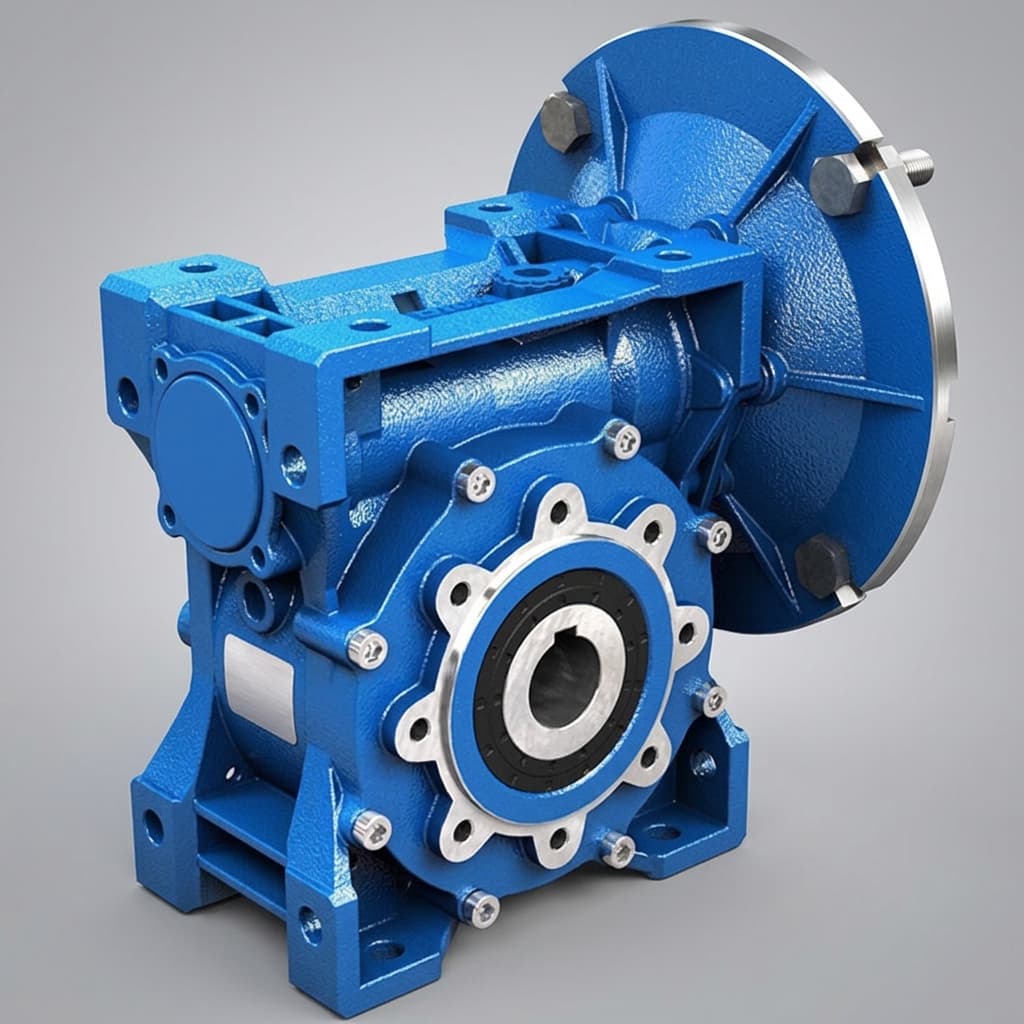
RV Reducer Sourcing Guide: 7 Essential Technical Questions to Ask Your Supplier
Use this RV reducer sourcing guide to vet suppliers, request hysteresis data, compare CAD fit, audit QC, and prepare a safer RFQ before ordering samples.
Sourcing industrial robotic components is not a simple transaction; it is an integration of mechanical engineering, quality assurance, and supply chain management. For buyers, procurement teams, distributors, and engineers dealing with heavy payload industrial robots, the RV (Rotary Vector) reducer is arguably the most critical joint in the entire robotic arm. It dictates the precision, repeatability, and lifespan of the machine.
With supply chain disruptions and extended lead times from tier-one manufacturers, many OEMs are exploring alternative RV reducer suppliers. However, making the switch carries risks. If a substitute reducer fails prematurely or fails to meet the expected lost motion target, the resulting warranty claims and downtime will easily erase any upfront cost savings.
Use this guide as a pre-RFQ and sample-approval checklist for global RV reducer sourcing programs as of July 18, 2026. It is written for industrial robot joints, positioners, and heavy-duty automation axes; it does not replace model-specific sizing, safety validation, or factory acceptance testing for your final machine.
To help you navigate this complex sourcing challenge, here are seven essential technical questions you must ask your RV reducer supplier before signing a contract or ordering a sample.
[!TIP] Key Takeaways for Buyers
- Do not accept catalog specifications at face value; demand empirical testing data such as hysteresis curves.
- Ensure the supplier has complete control over their heat treatment processes, as this is where cycloidal gear durability is made or broken.
- Evaluate the supplier's commercial stability and engineering support capabilities as rigorously as their mechanical specifications.
1. "Can you provide the actual Hysteresis Curve test data for this specific model?"
The single most critical performance metric for an RV reducer in a high-precision robotic application is its backlash, often referred to as "lost motion." While every manufacturer will print a lost motion specification (e.g., < 1 arcmin) in their catalog, this static number does not tell the whole story.
Why It Matters
When a robotic arm accelerates, decelerates, or changes direction, the reducer experiences torsional windup. A hysteresis curve maps exactly how the reducer deflects under an applied torque and how well it returns to its zero position once the torque is removed. This curve reveals the true torsional rigidity and the structural stiffness of the gearbox; review the backlash and torsional rigidity guide if your team needs the measurement terms aligned before supplier comparison.
What to Look For
When you ask this question, a reputable manufacturer will readily supply a hysteresis curve generated from a dedicated test rig (such as a stiffness testing machine). Look for a tight, symmetrical curve with minimal deadband at the zero-torque crossing. If a supplier hesitates or claims they only have the catalog specification, they likely do not perform 100% outbound testing on their reducers, which is a massive red flag for high-payload robotics.
2. "How do you control and verify the heat treatment of your internal components?"
An RV reducer relies on the complex interaction between cycloidal discs, pin gears, and eccentric shafts. Because there are multiple points of simultaneous contact distributing the load, the surface hardness and core toughness of these components are paramount.
Why It Matters
If the heat treatment is inconsistent, the cycloidal discs will suffer from premature wear or pitting. In high-payload applications (100kg to 300kg+), shock loads from emergency stops will shatter brittle internal components.
What to Look For
Ask the supplier whether they perform heat treatment in-house or outsource it. If it is outsourced, ask how they audit their vendor. They should mention specific processes like carburizing or carbonitriding, and they should be able to provide material certs and hardness testing logs (e.g., Rockwell C scale reports) for the batch of reducers you are purchasing.
3. "What is your stated Emergency Stop (E-Stop) Torque limit, and how was it validated?"
In the real world of industrial automation, robots crash. Programmers make mistakes, sensors fail, and emergency stops are triggered while the arm is moving at maximum velocity.
Why It Matters
An E-stop sends a massive shock wave of kinetic energy directly into the joints of the robot. The RV reducer must absorb this shock without catastrophic failure or permanent deformation of the pin gears.
What to Look For
The catalog should specify a "Peak Torque" or "Emergency Stop Torque" that is typically 3 to 5 times the rated torque. But you must ask how this was validated. Did they physically test reducers to destruction? Do they have a shock-load testing bench? Suppliers who have thoroughly tested their limits will confidently share their testing methodology.
4. "Are your dimensions an exact drop-in replacement for the industry standard, and can you provide the 3D STEP files?"
When seeking an alternative to a tier-one brand, the most common goal is to find a "drop-in replacement." However, "drop-in" can mean different things to different suppliers.
Why It Matters
If the input pilot diameter is off by a fraction of a millimeter, your servo motor will not mount properly. If the bolt circle on the output flange is slightly misaligned, you will have to redesign your robot's casting or machine a custom adapter plate, destroying your lead time and cost savings.
What to Look For
Request the 2D manufacturing drawings and the 3D STEP files immediately. Your engineering team must overlay these files with your existing design. If the application is still being sized, pair the supplier review with an internal RV reducer selection guide so torque, ratio, bearing load, and mounting checks are aligned before the RFQ.
Engineering vs. Procurement Alignment Table:
| Priority Area | Engineering Focus | Procurement Focus | Action Required by Supplier |
|---|---|---|---|
| Mechanical Fit | Output flange bolt patterns, pilot tolerances | Avoiding costly casting redesigns | Supply accurate 2D/3D CAD models prior to PO |
| Input Interface | Servo motor shaft compatibility | Minimizing custom adapter machining | Provide motor flange customization options |
| Lost Motion | Arcmin ratings, torsional rigidity | Meeting end-user accuracy warranties | Provide batch hysteresis curve testing data |
| Delivery Time | Sample availability for prototype build | Standardizing long-term supply chain | Guarantee lead times in service level agreement |
| Cost Control | Value engineering, avoiding over-specifying | Achieving target BOM cost reductions | Transparent volume discount structuring |
| Lubrication | Compatibility with existing plant grease | Consolidating maintenance supplies | Confirm grease type and sealing methodology |
5. "What are the exact lubrication requirements and sealing specifications?"
Maintenance intervals and grease leaks are two of the biggest complaints from end-users of industrial robots.
Why It Matters
RV reducers require specific types of grease (often semi-fluid greases) in precise volumes. If a supplier's sealing design is flawed, the reducer will leak grease onto the factory floor, or worse, lose lubrication and destroy itself.
What to Look For
Ask what specific grease they recommend and whether it matches what you already use in your factory (e.g., Molywhite RE No.00 or Vigor RV Grease). Furthermore, ask about their sealing mechanism. Do they use standard rotary shaft seals, or do they have proprietary labyrinth seal designs? How do they test for leaks before shipping?
6. "Can you outline your complete quality inspection process from raw material to final assembly?"
A manufacturer is only as good as their quality control (QC) department. In the world of high-precision gearing, you cannot inspect quality into a product at the end of the line; it must be built in at every step.
Why It Matters
If a supplier only tests the final assembled reducer, they will inevitably have a high scrap rate, which leads to delayed shipments and volatile pricing.
What to Look For
Ask for their standard Quality Control Flowchart. It should include:
- Incoming material inspection (spectroscopy for steel composition).
- In-process inspection (CMM checks on cycloidal disc profiles).
- Assembly inspection (bearing preload verification).
- Final outbound testing (noise, vibration, temperature rise, and hysteresis).
7. "What is your engineering support protocol if a reducer fails in the field?"
No matter how good the quality control is, failures in the field can and will happen, often due to unforeseen application conditions or integration errors.
Why It Matters
When a robot goes down on an automotive assembly line, every minute costs thousands of dollars. You need to know that your supplier will stand behind their product, analyze the failure, and provide a root-cause analysis (RCA) quickly.
What to Look For
Avoid suppliers who simply say, "We will send a replacement." While a replacement is nice, it doesn't solve the underlying engineering problem. You want a supplier who requests the failed unit back, tears it down, and provides a comprehensive RCA report detailing whether the failure was due to overload, lubrication starvation, or a manufacturing defect.
RV Reducer Sourcing Checklist
To summarize, bring this checklist to your next supplier meeting to ensure you cover all critical engineering and commercial bases:
- Request Hysteresis Curve Data: Do not accept static catalog numbers for lost motion.
- Verify Heat Treatment: Confirm in-house capabilities or strict vendor auditing for carburizing/carbonitriding.
- Confirm E-Stop Testing: Ask for the methodology behind their peak torque ratings.
- Obtain 3D CAD Files: Overlay their STEP files with your robot casting to verify drop-in compatibility.
- Review Lubrication Specs: Ensure the required grease matches your plant standards and verify the sealing design.
- Audit the QC Flowchart: Look for CMM inspection and 100% outbound vibration/noise testing.
- Define Failure Protocol: Establish the expected turnaround time for a formal Root Cause Analysis (RCA) on field failures.
Frequently Asked Questions (FAQ)
What is the typical lead time for a sample RV reducer?
While tier-one manufacturers may quote 20 to 40 weeks, agile alternative suppliers typically provide standard samples in 4 to 6 weeks, assuming no custom motor flanges are required.
Is it safe to mix different brands of RV reducers on the same robotic arm?
Yes, it is common to use different brands across different axes to optimize cost, provided the individual reducers meet the specific torque and rigidity requirements for their respective joints. However, the robotic controller may need minor tuning for the new rigidity profile.
Do alternative RV reducers require different servo motors?
Generally, no. Most reputable alternative suppliers will machine the input flange and sun gear to exactly match your existing servo motor dimensions (e.g., Yaskawa, Fanuc, or Siemens motors).
Conclusion: Making the Right Sourcing Decision
Sourcing an RV reducer is a high-stakes decision that bridges engineering capability with supply chain resilience. By asking these seven critical questions, buyers and engineers can confidently filter out low-tier traders and identify true manufacturing partners capable of delivering the precision, durability, and support required for industrial robotics.
If your team is currently evaluating RV reducer alternatives, you do not have to guess. Our engineering team provides transparent testing data, accurate CAD models, and comprehensive application support to ensure a seamless transition.
Contact our engineering team today to request a technical review of your current application and receive our detailed hysteresis testing reports.
Sources / References
- Nabtesco RV Precision Reduction Gear Catalog: Reference terminology for lost motion, rigidity, allowable torque, dimensional drawings, and reducer selection data. Nabtesco RV catalog PDF
- ISO 9283:1998 Manipulating industrial robots - Performance criteria and related test methods: Context for validating robot performance metrics instead of relying only on catalog claims. ISO 9283
- ISO 6508-1:2023 Metallic materials - Rockwell hardness test - Part 1: Standard reference for Rockwell hardness testing of metallic materials. ISO 6508-1
- ISO 9000 family - Quality management: Quality management framework reference for supplier process control, inspection discipline, and continuous improvement. ISO 9000 family
Author

Categories
More Posts
Predictive Maintenance for RV Reducers: A Buyer's and Engineer's Guide to Condition Monitoring
Discover how vibration analysis and thermal imaging can detect RV reducer degradation hours before failure, reducing TCO and unplanned downtime.
Hollow Shaft RV Reducers: Engineering and Sourcing Guide for Internal Cable Routing
Discover how hollow shaft RV reducers solve high-density wiring challenges in modern robotics. A complete guide on torque ratings, bore sizing, and procurement.
RV Reducer Selection for Heavy-Payload Collaborative Robots (20kg+)
Use this guide to select RV reducers for 20kg+ cobots: compare harmonic drives, torque, stiffness, friction, hollow shafts, and sourcing risks.