
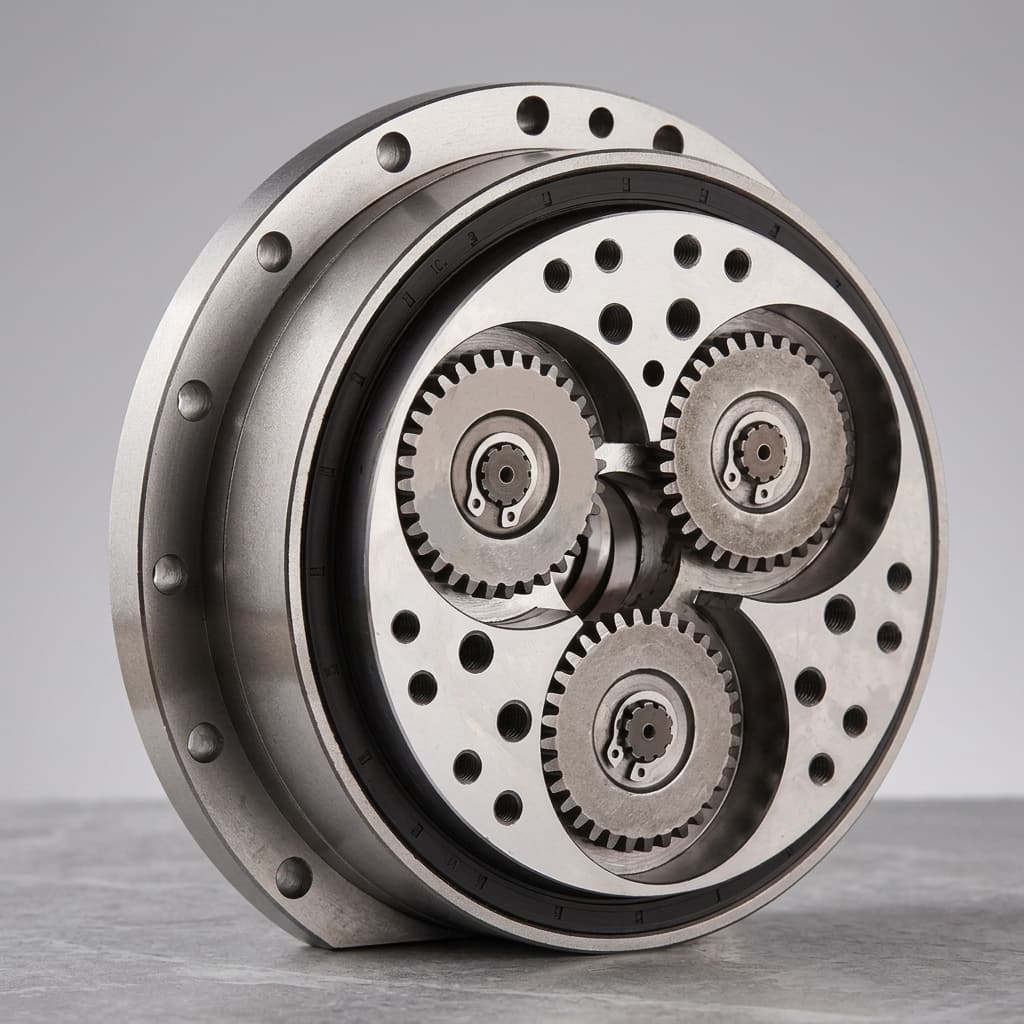
Dual-Sourcing RV Reducers: A 2026 Implementation Guide for Heavy Robotics
Implement dual-sourcing for RV reducers in 2026 with engineering checks, supplier validation steps, and sample-data CTAs for heavy robotics teams.
The global surge in industrial automation has created a predictable but severe pinch point in the supply chain: precision gear reducers. As of July 2026, the procurement landscape for RV (Rotary Vector) reducers is defined by a "bottleneck" dynamic. While servomotors and controllers have seen expanded manufacturing capacity, the highly specialized metallurgical and machining requirements of cycloidal RV reducers have left many OEMs dependent on a narrow supplier base.
For procurement managers and engineering directors overseeing heavy payload robotics, AGVs, and industrial positioners, relying on a single supplier for a mission-critical component is no longer a viable long-term strategy. The risk of extended lead times (often stretching beyond 20-30 weeks for specific ratios) directly threatens production scalability.
The solution is dual-sourcing. However, introducing a second source for a component that dictates the core rigidity, repeatability, and lifespan of a robotic arm is fraught with engineering risk. This guide provides a comprehensive framework for buyers, procurement teams, distributors, and engineers to successfully implement a dual-sourcing strategy for RV reducers without compromising machine performance.
Scope, Date, and Decision Boundaries
This guide is written for global procurement and engineering teams qualifying medium-to-heavy payload RV reducers for robot axes, AGV drive modules, rotary positioners, and factory automation systems in 2026 supplier markets. It is not intended for light collaborative robots, harmonic-drive wrist joints, commodity planetary gearboxes, or one-off prototype substitutions where redesign is acceptable.
The framework below should be treated as a qualification workflow, not a substitute for supplier audits, incoming inspection, accelerated life testing, or application-specific safety certification. If the reducer will be used in a safety-rated axis, a hazardous environment, or a medical/semiconductor clean process, the second source should not be released until the full machine-level risk assessment is repeated.
The Automation Paradox: Why RV Reducers Are the Chokepoint
In the robotics sector, the "Automation Paradox" refers to the phenomenon where the demand for automated manufacturing is constrained by the inability to automate the manufacturing of the robots themselves.
RV reducers are inherently difficult to mass-produce. Unlike standard planetary gearboxes, RV reducers rely on the simultaneous engagement of multiple cycloidal pins and an eccentric shaft to achieve zero-backlash, high-shock-load performance. Achieving this requires sub-micron machining tolerances and highly specialized, proprietary carburizing and heat-treatment processes.
Because of these barriers to entry, the market has historically been concentrated among a small group of specialist manufacturers; Nabtesco states that its precision reduction gears account for roughly 60% of the industrial robot market. When global demand spikes, driven by EV manufacturing, semiconductor fabrication, and general heavy industry, legacy suppliers can reach capacity limits. Procurement teams that operate on just-in-time (JIT) delivery models are the first to suffer when these capacities are exceeded.
What is Strategic Dual-Sourcing in Precision Robotics?
Dual-sourcing in this context does not mean buying from whichever supplier is cheapest on a given day. It is the strategic qualification of a primary and secondary manufacturer for the exact same component node, ensuring that both can act as drop-in replacements for each other on the assembly line without requiring software recalibration or mechanical redesigns.
A successful dual-sourcing strategy for RV reducers achieves three critical objectives:
- Supply Chain Resilience: Eliminates single-point-of-failure risks in the BOM (Bill of Materials).
- Lead Time Leverage: Forces competitive lead times and buffer-stock agreements from both suppliers.
- Cost Stabilization: Prevents monopolistic price hikes during periods of high demand.
Engineering vs. Procurement Alignment
The most common reason dual-sourcing initiatives fail is a misalignment between procurement (who prioritizes cost and lead time) and engineering (who prioritizes reliability and performance). Procurement cannot force a new reducer onto the BOM without engineering validation, and engineering cannot stubbornly refuse to test alternatives when production lines are starving for parts.
The following table outlines the differing priorities and the shared alignment requirements necessary for qualifying an alternative RV reducer supplier.
| Assessment Area | Procurement Priority | Engineering Priority | Required Alignment Action & Validation Method |
|---|---|---|---|
| Mechanical Dimensions | Drop-in replacement to avoid custom adapter costs. | Exact match of pilot diameter, bolt circle, and motor flange. | 3D STEP file overlay and physical CMM (Coordinate Measuring Machine) verification of the first article. |
| Torsional Rigidity | Meeting baseline spec sheet requirements. | Symmetrical hysteresis curve with zero deadband at crossover. | Supplier must provide batch-specific hysteresis testing reports; OEM must conduct physical load testing. |
| Shock Load Capacity | Validating stated E-stop torque limits for warranty claims. | Ensuring pin gears do not shatter under emergency stop inertia. | Destructive shock-load testing or dynamic simulation of the heaviest rated payload on the longest axis. |
| Lubrication & Sealing | Consolidation of factory lubricants (e.g., standardizing on one grease). | Preventing leaks in inverted orientations; extending maintenance intervals. | Confirming labyrinth seal design and compatibility with existing semi-fluid greases (e.g., Molywhite RE No.00). |
| Heat Treatment QA | Auditing supplier manufacturing capabilities. | Ensuring core toughness and surface hardness prevent premature pitting. | Review of supplier's metallurgy certs and in-house carburizing process controls. |
| Lead Time & Buffer | Negotiating 4-6 week SLA delivery times. | Guaranteeing rapid replacement of failed units in the field. | Contractual establishment of regional buffer stock and 48-hour Root Cause Analysis (RCA) protocols. |
The 4-Phase Dual-Sourcing Implementation Framework
To safely integrate an alternative RV reducer brand into a production robotic arm, organizations should follow a structured, four-phase validation process. Skipping these phases inevitably leads to field failures and warranty disasters.
Phase 1: Spec Mapping & CAD Verification
Before any metal is cut or PO is issued, a purely theoretical validation must occur.
- The Procurement Action: Identify 2-3 emerging tier-two manufacturers who have a proven track record in your specific industry (e.g., welding, painting, or medical). Request their standard catalogs and NDA-protected 3D models.
- The Engineering Action: Overlay the 3D STEP files of the alternative reducer with the legacy tier-one reducer. Pay strict attention to the input motor flange. Many alternative suppliers will machine custom input sun gears to match your existing servo motors (Yaskawa, Fanuc, Siemens) at no extra charge. Verify the output flange bolt pattern and the structural mounting holes.
Phase 2: Empirical Hysteresis & Shock Testing
A spec sheet is a marketing document; a hysteresis curve is engineering truth.
- The Procurement Action: Order 2 to 3 sample units of the target ratio and size. Ensure these are randomly selected from a production run, not "golden samples" hand-built by the supplier's R&D team.
- The Engineering Action: Do not immediately put the reducer on a robot. First, mount it to a rigid test stand. Apply torque up to the rated limit in both directions and plot the hysteresis curve. Compare this curve to the legacy supplier's curve. The area inside the curve represents lost energy; the width of the curve at zero torque represents lost motion (backlash). If the alternative reducer's curve is wildly asymmetrical or shows a large deadband, halt the qualification process immediately.
Phase 3: Pilot Build & Fatigue Analysis
Once the static rigidity is validated, the reducer must be tested dynamically in the actual application.
- The Procurement Action: Coordinate with production planning to allocate a test chassis.
- The Engineering Action: Install the alternative RV reducer on the most punishing axis of your machine (typically Axis 1 or Axis 2 on a 6-axis arm, which handles the highest moment loads). Run a continuous, 24/7 accelerated life test using the heaviest rated payload. Trigger multiple Emergency Stops (E-stops) while the arm is moving at maximum velocity to simulate real-world crashes. Monitor the reducer for temperature spikes, abnormal vibration frequencies, and grease leakage.
Phase 4: Production Phase-In
A hard cutover from Supplier A to Supplier B is extremely risky. A phased approach is mandatory.
- The Procurement Action: Negotiate a ramp-up purchasing agreement. For example, 90% legacy supplier, 10% alternative supplier in Q1, shifting to 70/30 in Q2, and stabilizing at 50/50 by Q4.
- The Engineering Action: Carefully track the serial numbers of the alternative reducers in the field. Establish a rapid feedback loop with the field service team to monitor for any early-infant mortality or degradation in positional accuracy over the first 10,000 hours of operation.
Dual-Sourcing Engineering & Procurement Checklist
Use this checklist during your cross-functional meetings to ensure no critical steps are bypassed when evaluating a new RV reducer supplier.
- Commercial Viability: Has the alternative supplier been financially stable for at least 5 years?
- Manufacturing Origin: Do they control their own heat treatment, or is it outsourced? (In-house is vastly preferred for cycloidal gears).
- CAD Match: Are the pilot diameters, bolt circles, and overall lengths identical to the primary source?
- Motor Interface: Can they supply the input sun gear pre-machined to match your specific servo motor spline/keyway?
- Hysteresis Data: Have they provided batch-specific hysteresis test curves for the samples ordered?
- E-Stop Validation: Has the engineering team subjected the pilot build to worst-case scenario emergency stops?
- Lubricant Compatibility: Does the new reducer use the same grease type and maintenance interval as the primary source?
- Support SLA: Is there a written agreement defining the turnaround time for a Root Cause Analysis (RCA) in the event of a field failure?
Overcoming Internal Pushback
Procurement teams will inevitably face resistance from engineering when proposing a new RV reducer supplier. Engineers are risk-averse by nature; if the current tier-one reducer works, they have no incentive to change it, regardless of how badly the 30-week lead time hurts the company's bottom line.
To overcome this, procurement must frame the initiative not as a "cost-down" exercise, but as a supply chain resilience imperative. Do not bring unknown, unvetted catalogs to engineering. Instead, bring them alternative suppliers who have already provided empirical hysteresis data and 3D CAD models. Prove that the alternative supplier operates at the same engineering standard as the legacy supplier.
Frequently Asked Questions (FAQ)
Does dual-sourcing RV reducers require changing the robot controller software?
In most cases, no. If the alternative reducer is a true drop-in replacement with identical gear ratios and similar torsional rigidity profiles, the existing servo tuning and kinematic parameters in the controller will perform normally. However, minor PID loop tuning may be required if the new reducer is significantly stiffer or softer than the legacy unit.
Can we dual-source different axes on the same robot arm?
Yes. It is entirely feasible to use a legacy tier-one reducer on Axis 1 (the base) while using a qualified alternative supplier on Axis 4, 5, or 6 (the wrist). This is an excellent way to phase in a new supplier with lower risk.
How do we verify the alternative supplier isn't just a trading company?
You must audit the factory, either in person or via a trusted third-party quality inspector. Specifically, ask to see their cycloidal gear grinding machines, their CMM inspection room, and their heat-treatment furnaces. Trading companies will not have this infrastructure.
Conclusion: Strategic Sourcing is a Competitive Advantage
In the tightly constrained robotics market of 2026, waiting 30 weeks for a critical component is a failure of supply chain strategy. Dual-sourcing RV reducers is no longer an optional cost-saving measure; it is a mandatory survival tactic for OEMs who wish to scale production reliably.
By aligning engineering validation with procurement strategy, companies can successfully break the bottleneck, integrating alternative precision reducers that meet or exceed the performance of legacy brands.
If your organization is suffering from extended lead times and needs a proven, heavy-duty alternative, our engineering team is ready to support your dual-sourcing initiative. We provide complete transparency, from CAD overlays to batch-specific hysteresis testing.
Contact our engineering team to request sample data, or review our RV Reducer Selection Guide to ensure your baseline specifications are locked in.
Sources / References
- International Federation of Robotics (IFR): Industrial robot demand data showing the long-term expansion that pressures precision-component supply chains. Global Robot Demand in Factories Doubles Over 10 Years
- Nabtesco Corporation: Official overview of precision reduction gears for industrial robots, including stated market position and technical role in robotic joints. Precision Reduction Gear
- Business Research Insights - RV Reducer Market Report: Market-report page used for macro context on RV reducer demand, regional growth, and supplier diversification. RV Reducer Market Size & Growth
Author

Categories
More Posts
Predictive Maintenance for RV Reducers: A Buyer's and Engineer's Guide to Condition Monitoring
Discover how vibration analysis and thermal imaging can detect RV reducer degradation hours before failure, reducing TCO and unplanned downtime.
Hollow Shaft RV Reducers: Engineering and Sourcing Guide for Internal Cable Routing
Discover how hollow shaft RV reducers solve high-density wiring challenges in modern robotics. A complete guide on torque ratings, bore sizing, and procurement.
RV Reducer Selection for Heavy-Payload Collaborative Robots (20kg+)
Use this guide to select RV reducers for 20kg+ cobots: compare harmonic drives, torque, stiffness, friction, hollow shafts, and sourcing risks.